How Many Units of Botox for a Lip Flip? Dosage Guide by Brand
One of the most common questions people ask before getting a lip flip is "how many units of Botox do I need?" The short answer is 4 to 10 units — but the exact number depends on your anatomy, your goals, and the neurotoxin brand your provider uses. This guide breaks down everything you need to know about lip flip dosing so you can walk into your appointment fully informed.
In This Guide
- 1. Standard Lip Flip Dosage: 4 to 10 Units
- 2. Dosage by Neurotoxin Brand (Botox vs. Dysport vs. Xeomin)
- 3. Where the Units Are Injected
- 4. Factors That Affect How Many Units You Need
- 5. First-Time vs. Returning Patients
- 6. Cost Per Unit: How Dosage Affects Price
- 7. What Happens If You Use Too Many or Too Few Units
- 8. Lip Flip Units vs. Other Botox Treatments
- 9. Preview Your Lip Flip Results
- 10. Frequently Asked Questions
Standard Lip Flip Dosage: 4 to 10 Units of Botox
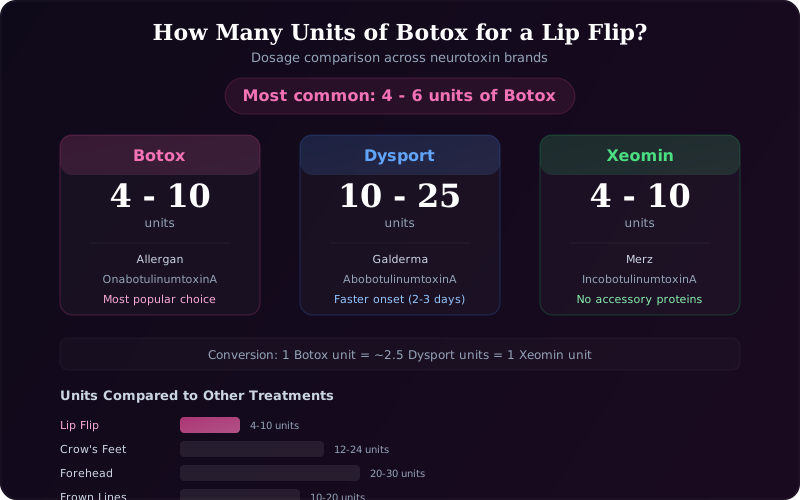
A lip flip uses between 4 and 10 units of Botox (onabotulinumtoxinA), making it one of the lowest-dose Botox treatments available. The exact number of units your injector uses will depend on your lip anatomy, the strength of your orbicularis oris muscle, and the result you are trying to achieve.
Most patients — especially first-timers — receive 4 to 6 units. This conservative starting dose is enough to produce a visible effect while minimizing any risk of over-relaxation. If 4 to 6 units do not deliver the desired result, your injector can add more units at a follow-up appointment, usually scheduled 2 weeks after the initial treatment.
The reason such a small number of units is effective comes down to anatomy. The orbicularis oris muscle — the circular muscle that surrounds the mouth — is relatively thin along the upper lip border where the injections are placed. A small dose of neurotoxin is sufficient to relax the superficial muscle fibers enough to allow the upper lip to gently roll outward, revealing more of the pink vermilion border. Larger doses are not necessary because the goal is relaxation, not paralysis.
It is worth emphasizing that the lip flip dosage is dramatically lower than most other Botox applications. Forehead lines typically require 20 to 30 units, crow's feet need 12 to 24 units per side, and frown lines use 10 to 20 units. The lip flip's 4 to 10 unit range means less product, lower cost, and a faster metabolization period — which is why lip flip results tend to last 6 to 12 weeks rather than the 3 to 4 months typical of other areas.
Dosage by Neurotoxin Brand
While "Botox" is the most commonly referenced brand, there are three FDA-approved neurotoxins used for lip flips. Each has a different unit measurement system, which can cause confusion if you do not understand the conversion:
| Brand | Lip Flip Dosage | Onset | Key Detail |
|---|---|---|---|
| Botox (Allergan) | 4 to 10 units | 3 to 5 days | Most widely used; gold standard |
| Dysport (Galderma) | 10 to 25 units | 2 to 3 days | Faster onset; may spread slightly more |
| Xeomin (Merz) | 4 to 10 units | 3 to 5 days | No accessory proteins; lower antibody risk |
The critical conversion to remember is: 1 unit of Botox equals approximately 2.5 units of Dysport. So if your provider uses Dysport and mentions 15 units, that is roughly equivalent to 6 units of Botox — a perfectly normal lip flip dose. Xeomin uses the same unit scale as Botox, so the numbers are directly comparable.
Do not be alarmed if your Dysport dosage sounds higher than what you expected. The higher number reflects a difference in how the product is measured, not a larger amount of active ingredient. All three products produce comparable results for the lip flip when dosed correctly by an experienced injector.
Dysport has one notable advantage: it tends to take effect slightly faster, with some patients seeing initial results in 2 to 3 days compared to 3 to 5 days for Botox and Xeomin. If you have an event coming up and want the fastest possible onset, Dysport may be a good option to discuss with your provider.
Where the Units Are Injected
Understanding where the Botox units go helps explain why such a small dose is effective. The units are distributed across 2 to 4 injection points along the upper lip, all targeting the orbicularis oris muscle just above the lip border.
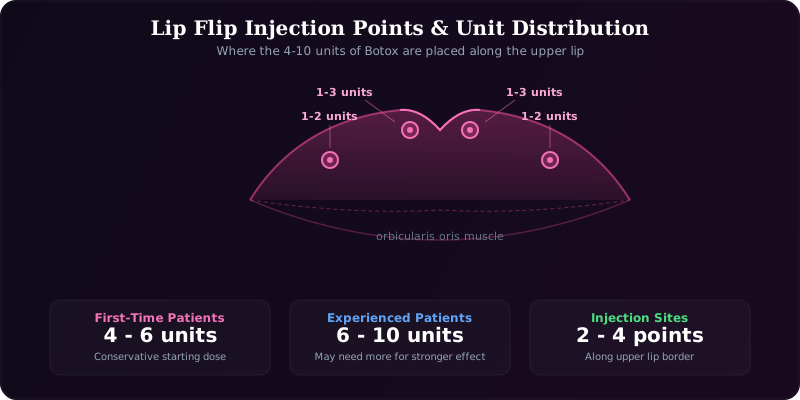
The most common injection pattern involves four points:
Two Central Points (Cupid's Bow)
The primary injection sites are located just above the two peaks of the cupid's bow. These are the most important points because the central portion of the upper lip is where the muscle pulls the lip inward most strongly. Each point typically receives 1 to 3 units of Botox.
Two Lateral Points (Outer Lip)
Additional injections may be placed at the outer thirds of the upper lip, roughly between the cupid's bow and the corners of the mouth. These points help create an even relaxation across the entire upper lip. Each lateral point typically receives 1 to 2 units.
Some injectors use a simplified two-point technique, placing all the units at the cupid's bow peaks. Others prefer a three-point pattern with one injection at the center of the cupid's bow and two at the outer thirds. The exact pattern depends on the injector's technique and your individual anatomy. What matters most is that the units are placed precisely into the muscle at the correct depth — too shallow and the product will not reach the muscle fibers; too deep and it may affect muscles that control other functions.
Each injection uses a very fine needle (typically 30 to 32 gauge) and delivers a tiny volume of liquid. The total volume of product injected during a lip flip is remarkably small — less than 0.1 mL in most cases. This is why the procedure is virtually painless and leaves no visible marks after the first few hours.
Factors That Affect How Many Units You Need
While 4 to 10 units is the standard range, several factors influence where you fall within that range:
- Muscle strength: Patients with a stronger, more active orbicularis oris muscle — often noticeable as a pronounced tucking-in of the upper lip when smiling — may need more units to achieve adequate relaxation. People who use their lip muscles frequently (singers, wind instrument players, public speakers) often have stronger muscles in this area.
- Lip anatomy: The thickness of your lip tissue, the depth of your cupid's bow, and the natural shape of your upper lip all influence dosing. Thinner lips may respond to fewer units, while thicker or more muscular lips may require the higher end of the range.
- Desired intensity: Some patients want only the subtlest possible change — just enough to keep the lip from tucking inward when smiling. Others want a more noticeable flip effect. A conservative approach starts with fewer units and adds more if needed.
- Gender: Male patients sometimes require slightly more units due to generally stronger facial musculature. However, this is not a universal rule, and dosing should always be individualized rather than based solely on gender.
- Age: Older patients may have thinner, less elastic lip tissue that responds differently to neurotoxin. Your injector will assess your tissue quality during the consultation and adjust the dose accordingly.
- Treatment history: Patients who have been getting regular lip flips may find that their muscle has become conditioned to stay relaxed, potentially requiring the same or fewer units over time. First-time patients typically start at the conservative end of the range.
- Neurotoxin brand: As covered above, the brand your provider uses directly affects the unit count. Always confirm which product is being used so you can accurately compare dosages.
First-Time vs. Returning Patients
Your experience level with lip flips directly influences how your injector approaches dosing. Here is what to expect based on where you are in your treatment journey:
First Treatment
- +Start with 4 to 6 units of Botox
- +Conservative approach to gauge your response
- +2-week follow-up to assess results
- +Optional touch-up if more units are needed
- +Results may wear off slightly faster initially
Returning Patients
- +Dosage refined based on previous results
- +Typically 4 to 8 units (dialed in over sessions)
- +Muscle may be partially conditioned already
- +Results may last longer with consistent treatments
- +Some patients can eventually reduce their dose
A common misconception is that you will need progressively more units over time as you "build tolerance." True immunologic resistance to botulinum toxin is extremely rare. What does happen is that you become more accustomed to seeing the enhanced version of your lip and may perceive the effect as less dramatic — even though the physical result is the same. If you feel your results are diminishing, talk to your injector before assuming you need more units. Often, the dose stays consistent across treatments.
Cost Per Unit: How Dosage Affects Price
Understanding per-unit pricing helps you calculate how much your lip flip will cost based on the number of units used. Here is the typical cost breakdown:
| Brand | Cost Per Unit | Lip Flip Range | Product Cost |
|---|---|---|---|
| Botox | $10 to $20 | 4 to 10 units | $40 to $200 |
| Dysport | $4 to $8 | 10 to 25 units | $40 to $200 |
| Xeomin | $8 to $16 | 4 to 10 units | $32 to $160 |
Notice that while Dysport has a lower per-unit price, you need more units — so the total product cost ends up being comparable across all three brands. The all-in cost for a lip flip — including the provider's injection fee and clinical overhead — typically ranges from $80 to $500, with most patients paying $100 to $300.
Some providers charge a flat rate for the lip flip procedure regardless of how many units they use. Others charge strictly per unit. If your provider uses per-unit pricing, knowing the typical unit range (4 to 10 for Botox) helps you estimate your cost before your appointment. Always ask your provider which pricing model they use and whether consultation fees are separate or included.
Many neurotoxin brands also offer loyalty programs that reduce your per-unit cost over time. Allergan's Alle program provides points toward future Botox treatments, and Galderma's ASPIRE program offers savings on Dysport. These programs are free to join and can meaningfully reduce your annual lip flip costs if you get regular treatments.
What Happens If Too Many or Too Few Units Are Used
Getting the dosage right is one of the most important aspects of a successful lip flip. Here is what happens at each end of the spectrum:
Too Many Units
- –Difficulty drinking from cups or through straws
- –Slightly slurred speech or difficulty pronouncing certain sounds
- –Unintentional drooling when eating or drinking
- –Lip feels numb or overly relaxed
- –Resolves on its own as neurotoxin wears off (4 to 8 weeks)
Too Few Units
- –Minimal or no visible change in lip position
- –Upper lip still tucks inward when smiling
- –Results wear off faster than expected
- –Easily corrected — injector can add more units at a follow-up
- –No risk or side effects from under-dosing
This is exactly why experienced injectors prefer to start conservative. It is much easier — and safer — to add a few more units at a follow-up than to deal with the temporary inconvenience of over-relaxation. Under-dosing is a minor inconvenience (you schedule a quick touch-up). Over-dosing requires waiting for the neurotoxin to wear off, which can take several weeks.
If you have received too many units and are experiencing functional issues, contact your provider. While there is no antidote to reverse the effects of Botox (unlike hyaluronidase for filler), your provider can offer guidance on managing the symptoms while the product metabolizes. In most cases, the over-relaxation effects begin to improve within 2 to 4 weeks.
Lip Flip Units vs. Other Botox Treatments
Putting the lip flip's dosage in context with other common Botox treatments shows just how minimal the lip flip dose really is:
| Treatment Area | Typical Botox Units | Duration | Avg. Cost |
|---|---|---|---|
| Lip Flip | 4 to 10 units | 6 to 12 weeks | $80 to $300 |
| Frown Lines (Glabella) | 10 to 20 units | 3 to 4 months | $150 to $400 |
| Crow's Feet (per side) | 6 to 12 units | 3 to 4 months | $150 to $350 |
| Forehead Lines | 20 to 30 units | 3 to 4 months | $250 to $600 |
| Bunny Lines (Nose) | 4 to 8 units | 3 to 4 months | $80 to $200 |
| Masseter (Jaw Slimming) | 25 to 50 units per side | 4 to 6 months | $500 to $1,200 |
The lip flip uses the fewest units of any common Botox treatment, which directly translates to the lowest cost per session. This makes it an extremely low-barrier entry point for anyone considering Botox for the first time. If you are nervous about trying neurotoxin injections, the lip flip is arguably the gentlest introduction — minimal product, minimal discomfort, and fully reversible within weeks.
Many patients who start with a lip flip eventually combine it with other Botox treatments during the same appointment. A combined session — lip flip plus forehead or crow's feet — allows the injector to address multiple areas in a single visit, often with package pricing that reduces the overall cost per unit.
Preview Your Lip Flip Results with AI
Curious what a lip flip would look like on you before committing to a treatment? Our AI-powered lip flip visualizer generates a realistic preview based on your own selfie — so you can see the subtle difference that 4 to 10 units of Botox could make on your upper lip, without spending a dollar or booking a consultation.
See What a Lip Flip Would Look Like on You
Upload a selfie and get an AI-powered preview of your lip flip results. Private, instant, and clinically calibrated.
Try the AI Lip Flip VisualizerFrequently Asked Questions
How many units of Botox do you need for a lip flip?
A lip flip typically requires 4 to 10 units of Botox. Most first-time patients start with 4 to 6 units, while experienced patients or those wanting a stronger effect may use 6 to 10 units. The equivalent in Dysport is 10 to 25 units, and Xeomin uses the same 4 to 10 unit range as Botox.
How much does each unit of Botox cost for a lip flip?
Botox typically costs $10 to $20 per unit depending on your provider and location. For a lip flip using 4 to 10 units, the product cost alone ranges from $40 to $200. Many providers charge a flat rate of $100 to $300 that includes the product, injection fee, and clinical overhead.
Can I get more units for a bigger lip flip result?
Using more units does not necessarily create a bigger result. Exceeding 10 units of Botox in the lip area increases the risk of over-relaxing the muscle, which can cause difficulty drinking through a straw, speaking clearly, or keeping the lips sealed. A skilled injector uses the minimum effective dose for a natural result.
How many units of Dysport are needed for a lip flip?
A lip flip with Dysport typically requires 10 to 25 units. Dysport uses a different unit measurement than Botox, with a general conversion ratio of 2.5 Dysport units equaling 1 Botox unit. So 4 to 10 Botox units translates to roughly 10 to 25 Dysport units. The results are comparable.
Where are the Botox units injected for a lip flip?
The units are distributed across 2 to 4 injection points along the upper lip border, targeting the orbicularis oris muscle. The two most common injection sites are just above the cupid's bow peaks. Additional injections may be placed at the outer corners of the upper lip depending on the patient's anatomy and goals.
Do you need more Botox units over time?
Most patients do not need more units over time. With regular treatments every 2 to 3 months, many patients find that the muscle becomes conditioned to stay relaxed, and some injectors can maintain results with the same or fewer units. True resistance to Botox is rare.
Is 4 units of Botox enough for a lip flip?
Yes, 4 units is a common and effective starting dose. Many patients see noticeable results with just 4 units, especially if they have a thinner upper lip or a muscle that responds well to neurotoxin. Starting conservative allows your injector to add more at a follow-up if needed — which is always safer than starting too high.
Final Thoughts
The lip flip is one of the simplest Botox treatments available — just 4 to 10 units, placed across 2 to 4 injection points, completed in under a minute. Whether you are getting Botox, Dysport, or Xeomin, the dosage is remarkably small compared to other treatment areas, which keeps both the cost and risk low.
The best approach for most patients is to start conservative (4 to 6 units for first-timers), assess the results at 2 weeks, and adjust from there. A skilled injector will tailor the dosage to your specific anatomy and goals rather than applying a one-size-fits-all number.
For a comprehensive overview of the lip flip procedure, costs, and recovery, read our full guide on what a lip flip is. If you want to see what results look like day by day, check out our lip flip before and after guide. And if you are ready to visualize what a lip flip could look like on your own face, try our AI-powered lip flip visualizer.
Related Guides
Medical Disclaimer: This article is for informational purposes only and does not constitute medical advice. Always consult with a board-certified dermatologist, plastic surgeon, or qualified medical professional before undergoing any cosmetic procedure. Individual results vary. Dosage recommendations are general guidelines — your injector will determine the appropriate number of units based on your individual anatomy and goals.